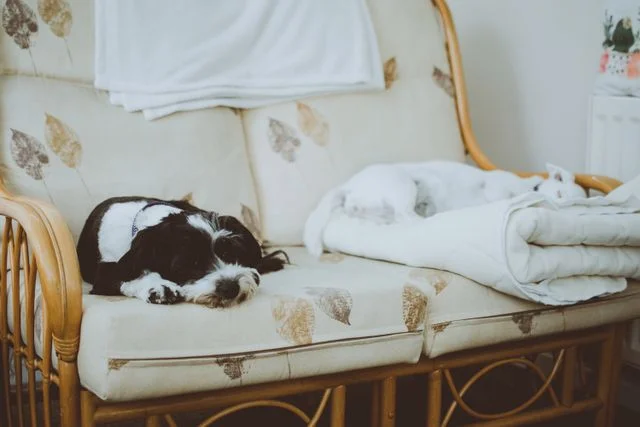
According to the American Pet Products Association, approximately 67% of U.S. households — roughly 90 million homes — own at least one pet. That is a lot of sofas, armchairs, and rugs taking a daily beating from claws, fur, and muddy paws. The average American household with pets spends more on replacing or repairing furniture than households without, and most of that damage comes down to one thing: buying the wrong materials in the first place.
This guide covers everything a pet owner actually needs to know before buying furniture — from the best and worst fabrics for cats and dogs, to pet friendly furniture options that hold up over years of real use. You will find specific guidance on cat wall furniture, floor to ceiling cat furniture, dog crate furniture that fits into a normal living room, and outdoor cat furniture that survives the seasons.
Most articles on this topic stop at a generic list of fabric names. This one goes further — breaking down why certain materials fail, which brands are actually worth buying in the US and UK, and what the furniture industry does not usually tell you about “pet-proof” claims. If you have already ruined one too many couches, this is the practical reset you need.
Best Fabrics for Pet Owners: What Actually Holds Up
Not all pet-friendly fabrics perform the same way, and the difference between a good choice and a bad one becomes obvious within about six months. The three materials that consistently outperform the rest are microfiber, genuine leather, and tightly woven synthetic blends.
Microfiber is the most recommended fabric for homes with dogs or cats. The fibers are woven so tightly that pet hair sits on the surface rather than embedding into the weave, which means it wipes or vacuums off cleanly. It also resists light scratching better than most people expect — cats rarely find it satisfying to scratch because the tight surface does not give them the feedback they are looking for. Brands like Pottery Barn (US) offer microfiber upholstery specifically tested for pet households, and their performance guarantees on certain ranges cover pet-related wear.
Genuine leather and high-quality faux leather are strong second choices. Leather does not trap fur and cleans easily with a damp cloth. The trade-off is that it shows puncture marks from sharp claws over time — typically between 18 months and three years with a cat that scratches actively. Faux leather made from polyurethane (PU) tends to peel and crack before genuine leather does, so if you go this route, buy the real thing or spend on a quality alternative. Loaf (UK) produces a range of genuine leather sofas that are popular with pet owners specifically because the hides are treated and thick enough to resist light scratching.
Tightly woven canvas, denim-weight cotton blends, and performance synthetics like Crypton fabric are also solid performers. Crypton is a proprietary fabric treatment that makes upholstery moisture-resistant, stain-resistant, and odor-resistant — it has been widely adopted in both the hospitality sector and pet-friendly home furniture for exactly this reason.
Quick Note: “Pet-proof” is a marketing claim, not a specification. No fabric is fully immune to a determined scratching cat or a large dog with wet paws. The goal is choosing materials that slow the damage and clean up easily — not ones that claim to be indestructible.
Fabrics to Avoid When You Have Pets
The wrong fabric choice will cost you real money. These materials look appealing in a showroom but are poor decisions in any home with pets.
Velvet and chenille are the worst choices for cat owners. Both have looped or cut pile surfaces that cats instinctively scratch — the texture gives them exactly the tactile feedback they want. Cat claws catch in velvet easily, pulling threads and creating snags that unravel with continued use. Within weeks, a velvet sofa in a home with a cat can look years old.
Loose-weave linens and open-knit fabrics trap fur aggressively and are difficult to clean. The fibers break down quickly under claws, and pet odors absorb into the material at a cellular level that surface cleaning cannot remove. Sisal-textured upholstery is particularly bad — it actively invites scratching because it feels identical to scratching posts.
Wool upholstery, while beautiful, collects pet hair in a way that vacuuming alone cannot resolve. It also tends to pill and mat in high-use areas, which accelerates in homes where pets rest on the furniture regularly.
The honest reality is that light-colored velvet, loosely woven linen, and delicate silk-blend upholstery are not just impractical — they are a source of ongoing frustration. If you love these materials, keep them in rooms your pets do not access. For the main living areas where pets spend time, choose a different material entirely and save the aesthetics for spaces you control. You can explore how different furniture styles work with pet-friendly material choices to find something that looks good without compromising durability.
Cat Wall Furniture and Floor to Ceiling Cat Furniture Compared
Cat furniture has evolved significantly in the last five years. The two main categories that dominate the market now are wall-mounted systems and traditional floor to ceiling cat furniture, and they suit different homes and cats in different ways.
Wall-mounted cat furniture — floating shelves, hammocks, perches, and ramps — frees up floor space and creates vertical territory that cats naturally prefer. The main brands doing this well are The Refined Feline (US) and Omlet (UK/US). The Refined Feline makes wall-mounted cat shelving that is explicitly designed to look like interior decor rather than cat equipment, which matters a great deal in open-plan living spaces. Their shelves use the same wall anchoring system as heavy art, so they hold a 15-pound cat reliably. Cat wall furniture works best in homes where floor space is limited or where the owner wants a minimalist look.
Floor to ceiling cat trees, by contrast, give cats more physical structure to climb — the tension pole design means they do not require drilling into walls, which is a significant advantage for renters. The vertical scratching surface on most floor-to-ceiling models also redirects cats away from your actual furniture, which is a genuine functional benefit beyond just enrichment.
| Feature | Cat Wall Furniture | Floor to Ceiling Cat Furniture |
|---|---|---|
| Floor space used | None | Small footprint (base) |
| Wall drilling required | Yes | No |
| Suitable for renters | Usually not | Yes |
| Aesthetic flexibility | High | Moderate |
| Scratching surface included | Rarely | Usually yes |
| Price range (USD) | $60–$300+ | $40–$200 |
Our take: For most cat owners in apartments or smaller homes, floor to ceiling cat furniture is the more practical starting point. It requires no permanent installation, costs less, and provides scratching surfaces that actually protect your sofa. Wall-mounted systems are worth the investment once you have confirmed your cat actively uses vertical space — not all cats do, and it is an expensive mistake to discover after drilling into your walls.
Dog Crate Furniture That Fits a Real Living Room
The standard wire dog crate is functional but looks like it belongs in a kennel, not a living room. Dog crate furniture — crates built into end tables, TV consoles, or accent pieces — solves the aesthetic problem without compromising the crate’s function for the dog.
The category ranges from simple wooden end table crates to large entertainment unit builds that house a full-size crate. Fable Pets (US) and Lords & Labradors (UK) both produce furniture dog crates that are worth looking at specifically. Fable Pets focuses on clean, modern wood designs that work in contemporary interiors — their crates use removable trays for cleaning, which is the feature most people overlook when buying. Lords & Labradors offers a broader size range including XL crates for larger breeds, which is a significant gap in the US market where most furniture crates top out at medium-dog sizing.
The key practical considerations when buying dog crate furniture are ventilation, cleaning access, and door placement. A crate built into a beautiful cabinet that has poor airflow is uncomfortable for the dog and defeats the purpose. Look for slatted or mesh side panels rather than fully enclosed wood on all sides. The cleaning tray should pull out from the front or side without requiring you to disassemble the piece — anything that makes cleaning harder means it gets done less often.
One honest trade-off: hidden dog crate furniture limits your ability to expand as your dog grows. If you have a puppy, buying a crate sized for their adult weight from the start saves you buying twice. Most furniture crates are not adjustable the way wire crates are, so get the sizing right before committing to a piece you plan to keep for years. If you’re also thinking about outdoor spaces for your dog, the aluminum patio furniture guide on this site covers durable outdoor options that hold up to pets and weather equally well.
Outdoor Cat Furniture: What Works and What Deteriorates Fast
Outdoor cat furniture needs to handle UV exposure, rain, temperature fluctuation, and the general wear of a cat that spends real time in it. A lot of what is marketed as outdoor cat furniture is really just indoor furniture with no meaningful weatherproofing, and it shows within a season.
The materials that work outdoors are powder-coated steel, treated hardwood, and high-density polyethylene (HDPE). Avoid anything with exposed MDF, untreated particleboard, or foam that is not rated for outdoor use. MDF swells and crumbles when it gets wet, and outdoor cat enclosures built with it typically last one British winter before the structure starts to fail.
Outdoor enclosures — often called “catios” — are the most functional form of outdoor cat furniture for owners who want to give their cats access to fresh air safely. Entry-level catios from Omlet (available in both the US and UK) are galvanized steel construction with mesh panels and connect directly to a window or door. These genuinely hold up outdoors because the construction is designed for it rather than adapted from indoor designs.
For standalone outdoor cat trees rather than full enclosures, look for pieces that use teak or cedar rather than pine or pressed wood. Both teak and cedar resist moisture and insects naturally without chemical treatment. The sisal rope used on scratching posts will deteriorate outside — it absorbs moisture, grows mold, and loses its texture within months. Outdoor-rated synthetic rope or bare wood posts perform far better in exposed conditions.
If you have a terrace or patio and want the outdoor cat setup to look considered rather than improvised, it is worth thinking about how it integrates with your existing outdoor furniture. The guide to aluminum patio furniture covers materials and finishes that complement outdoor pet furniture well, particularly for contemporary spaces.
How to Protect Your Existing Furniture from Pet Damage
Buying the right furniture from the start is ideal. But if you already have pieces you want to protect, there are practical strategies that actually work — and some that are a waste of money.
Furniture covers and throws work when they stay in place. Weighted or fitted covers designed specifically for pet households, like those from Gorilla Grip or similar brands, use non-slip backing and stay positioned better than a standard throw blanket. The key is washing them regularly, because a pet-hair-saturated cover pressed into your furniture defeats the purpose.
Double-sided sticky tape applied along the edges and corners of sofas deters scratching effectively in most cats — the texture is unpleasant on their paws and they quickly learn to avoid treated surfaces. This is low-cost and reversible, which makes it the first thing to try before considering anything more structural.
Scratch deterrent sprays with citrus or eucalyptus bases have mixed results. Some cats are strongly deterred; others are indifferent. According to the ASPCA, the most reliable scratch deterrent is pairing a repellent with an attractive alternative nearby — meaning a scratching post placed next to the furniture you want protected, not across the room. Cats scratch specific locations partly out of habit and partly because the location itself is desirable to them. Removing the habit works better when the replacement is in the same spot.
Slipcovers deserve more credit than they get. A well-fitted slipcover on a sofa extends its lifespan significantly and can be machine washed. For a sofa you already own and want to protect through the years of a pet’s life, a quality slipcover is more cost-effective than replacing the piece. Just make sure you’re choosing one with a tight enough weave that claws cannot catch in it — loosely woven slipcovers are often worse than no cover at all. For interior styling ideas that work around both pets and furniture choices, the furniture styling guide on this site covers how to make practical choices look intentional.
Quick Note: Nail caps (soft rubber caps glued to cat claws) are a veterinarian-recommended option for cats that scratch destructively. They need replacing every 4–6 weeks and require the cat to tolerate handling. For owners who use them consistently, they are one of the most effective ways to protect upholstered furniture without restricting the cat’s movement.
Frequently Asked Questions
What is the most scratch-resistant sofa fabric for cats?
Tightly woven microfiber and genuine leather consistently outperform other fabrics for scratch resistance. Microfiber is the safer choice if your cat scratches frequently — the tight weave gives claws nothing to catch on. Leather resists scratching reasonably well but will eventually show puncture marks from repeated contact. Canvas and performance fabrics like Crypton are also strong options. Velvet, chenille, and loosely woven linen should be avoided entirely in homes with cats that scratch.
Is leather furniture a good choice for dog owners?
Leather is a practical choice for most dog owners, with a few caveats. It does not trap fur, cleans easily with a damp cloth, and holds up well against normal dog activity. The main risks are from sharp claws on hardwood floors or agitated scratching at the sofa edge — these leave visible marks in leather over time. Dogs that chew furniture are a separate problem that no fabric solves. Genuine leather tends to age more gracefully with minor wear than faux leather, which tends to peel and look worse faster.
Do floor to ceiling cat trees actually protect furniture from scratching?
Yes, when placed strategically. Cats scratch to mark territory, stretch their muscles, and shed claw sheaths — they are not doing it to annoy you. A floor to ceiling cat tree with sisal-covered posts placed near the furniture they currently scratch gives them a better option in the same location. Simply placing a cat tree in a different corner rarely works because the behavior is location-specific. According to the American Association of Feline Practitioners, providing appropriate scratching surfaces in locations the cat already uses is the most effective way to redirect the behavior.
What size dog crate furniture do I need for a Labrador or Golden Retriever?
A Labrador or Golden Retriever typically needs a 42-inch crate (measuring the internal floor length). Most furniture dog crates sold as “large” size accommodate up to 40–42 inches, but you should verify the internal dimensions rather than relying on size labels, which vary between brands. The dog should be able to stand fully upright, turn around, and lie stretched out without touching the sides. If you have a puppy of either breed, buy for their adult size from the start — both breeds reach 55–80 lbs at maturity.
Can outdoor cat furniture stay out year-round in the UK or northern US states?
Only if it is genuinely rated for outdoor use. Powder-coated steel frames, galvanized mesh, and teak or cedar wood can handle year-round outdoor exposure in most UK and northern US climates. MDF, untreated pine, sisal rope, and indoor-grade foam will deteriorate significantly over one winter of rain and freeze-thaw cycles. Omlet’s metal catios are specifically designed to stay outdoors permanently and are a reliable benchmark for what outdoor-rated cat furniture should look like structurally.
How do I keep my sofa clean with multiple pets?
A consistent routine matters more than any single product. Vacuum fabric sofas at least twice a week using an upholstery attachment — pet hair embeds more deeply the longer it sits. Wash removable covers monthly. Use a lint roller on leather and microfiber surfaces between washes. Enzyme-based cleaners are the most effective option for accident cleanup because they break down the proteins in urine and vomit rather than just masking the odor. Keeping a consistent cover or throw on high-use areas and washing it weekly is the single most effective thing most multi-pet households are not doing.
Final Thoughts
The biggest mistake pet owners make with furniture is not the fabric they choose — it is assuming the problem starts after they buy. The real decision happens before purchase: matching the material to the specific pets you have, the way they behave, and the rooms they use. A microfiber sofa chosen for a dog household and a floor-to-ceiling cat tree positioned where your cat actually scratches will outlast three couches chosen for looks alone.
If you are starting from scratch, prioritize microfiber or genuine leather for upholstered pieces, get your cat vertical territory sorted before they start redirecting their claws to your furniture, and choose dog crate furniture based on adult size rather than current puppy size. One thoughtful purchase now saves the cycle of replacing things that were wrong from the start.
About the Author