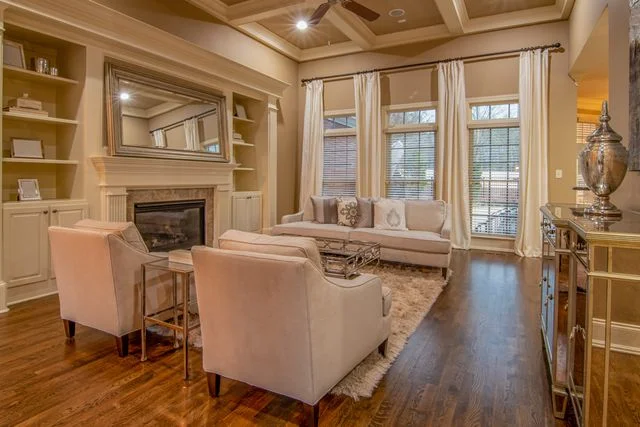
The global furniture market was valued at over $720 billion in 2023, according to Statista, and a significant driver of that spending is buyers who don’t actually know what style they want — they just know something feels off. Picking a sofa or dining table without understanding furniture styles is like choosing paint without knowing the undertone. You might get lucky, but the odds aren’t great.
This article walks through every major furniture style category — from centuries-old traditional movements to the raw minimalism of Brutalism and the organic warmth of modern farmhouse design. You’ll see how each style developed, what defines it visually, and which pieces best represent it. That context makes buying decisions much easier and more intentional.
Most style guides treat furniture periods as isolated chapters in a textbook. This one connects them — showing you why Bauhaus was a direct response to Art Nouveau, why Brutalism and Industrial share DNA, and how to use that knowledge practically when you’re actually furnishing a room.
Traditional Furniture Styles: Victorian, French Provincial, and Rococo
Traditional furniture styles are defined by craftsmanship, symmetry, and ornamentation. They draw from European design periods spanning roughly 1600 to the early 1900s, and they share a commitment to formality that modern styles actively rejected.
Victorian furniture (1837–1901) is among the most recognizable traditional styles. Named after Queen Victoria’s reign, it features dark mahogany or walnut frames, heavy tufted upholstery, carved cabriole legs, and dramatic silhouettes. A genuine Victorian parlor chair is not subtle — it announces itself. The style reflected the era’s industrial wealth; furniture was a status signal, and more carving meant more money. If you’re drawn to richly upholstered Chesterfield sofas — that deep button-tufting over rolled arms — you’re looking at a Victorian legacy piece.
French Provincial furniture emerged from the rural provinces of 17th and 18th century France as a more accessible version of the court styles seen at Versailles. It retains the curved lines and decorative sensibility of formal French design, but the materials are lighter — often fruitwood like cherry or walnut — and the scale is more domestic. Carved floral motifs, distressed finishes, and cabriole legs with pad feet are its calling cards. It works exceptionally well in country kitchens and bedroom suites.
Rococo furniture (roughly 1720–1760) represents French design at its most extravagant. Think asymmetrical curves, shell and leaf motifs, gilded surfaces, and sinuous S-shaped legs. Rococo pieces are made to be admired, not just sat on. Louis XV chairs are the textbook example — shallow seats, low backs, and elaborately carved frames. This style tends to be polarizing: deeply romantic to some, fussy to others. It works best when used as an accent rather than a whole-room commitment.
Art Movements That Shaped Furniture: Art Nouveau, Bauhaus, and Brutalism
Some of the most distinctive furniture in history came not from craftsmen working in tradition, but from art movements that wanted to break entirely with what came before.
Art Nouveau swept through Europe between roughly 1890 and 1910 as a reaction against the heavy historicism of Victorian and Rococo design. Its defining quality is the organic line — sinuous, flowing forms drawn from nature: vines, flowers, insects, and waves. Louis Majorelle’s furniture from Nancy, France is a masterclass in the style; his pieces appear almost grown rather than built. Art Nouveau embraced new materials like bent iron alongside traditional wood, and it applied the same decorative intensity to everyday objects. The result is furniture that feels simultaneously elegant and alive.
Bauhaus furniture (1919–1933) is the conceptual opposite. Founded by Walter Gropius in Weimar, Germany, the Bauhaus school argued that beauty should emerge from function and honest use of materials, not applied decoration. Marcel Breuer’s Wassily Chair — made from bent tubular steel and leather — remains one of the most influential furniture designs in history, and it looks as current today as it did in 1925. Bauhaus principles became the foundation of virtually everything we call modern design. If you own clean-lined furniture with visible structural elements and no ornament, you’re living in a space shaped by Bauhaus thinking.
Brutalism in furniture arrived in the postwar decades, borrowing the architectural movement’s commitment to raw, honest materials. Where Brutalist buildings exposed concrete, Brutalist furniture exposes the weight and grain of solid wood — often oak or walnut — with angular, unapologetic forms. British designers like Ercol pushed a version of this through their Windsor chair production in the 1950s and 60s. Today, brutalism in furniture is experiencing a genuine revival, particularly among buyers who find Scandinavian minimalism too polished.
Quick Note: Art Nouveau and Bauhaus aren’t just historical movements — many US and UK retailers still produce pieces directly inspired by both. Design Within Reach (US) and Heal’s (UK) both carry modern interpretations that bring these aesthetics into contemporary homes at varying price points.
Modern Furniture Styles: Modern Farmhouse, Scandinavian, and Japanese
Modern furniture styles emerged through the 20th century and into the present as a response to industrialization, globalization, and — in some cases — a longing for simplicity and nature.
Modern farmhouse furniture became the dominant interior trend of the 2010s and has proven surprisingly durable. It blends the warmth of rustic materials — reclaimed wood, shiplap, linen — with cleaner silhouettes than traditional country styles. Shaker-style cabinet doors, farm sinks, and open shelving are its hallmarks. The appeal is the contrast: raw textures against white paint, old wood against modern fixtures. It reads as relaxed and livable, which is exactly why it’s been so commercially successful. If you’re shopping for rustic bedroom furniture or a farmhouse-style console table, you’re working within this aesthetic.
Scandinavian design — often called Scandi or Nordic design — comes from mid-20th century Denmark, Sweden, Finland, and Norway. Its core philosophy is democratic: well-designed, functional objects should be available to everyone, not just the wealthy. According to the Victoria and Albert Museum, the 1954 Design in Scandinavia touring exhibition introduced this aesthetic to North American audiences and permanently shifted how Western consumers thought about simple, purposeful furniture. Light woods like beech and ash, clean tapered legs, organic shapes, and a restrained color palette define the look. Hans Wegner’s Wishbone Chair and Arne Jacobsen’s Egg Chair are its most famous products.
Japanese furniture is perhaps the most misunderstood style in Western homes. It’s not simply minimalism with tatami mats. Traditional Japanese furniture is rooted in wabi-sabi — the acceptance of imperfection and transience — and in a relationship with the floor rather than elevated seating. Low platform beds, zaisu chairs (legless floor chairs), and tansu chests (modular stacking cabinetry) are defining forms. Materials tend to be natural: paulownia, hinoki cypress, bamboo, and shoji paper. The discipline of negative space is as important as the furniture itself. When done well, a Japanese-influenced room feels meditative. When done poorly, it feels empty.
Eclectic and Industrial Furniture Styles: Gothic, Bohemian, Chesterfield, and Industrial
Not every style fits neatly into a historical movement or national design tradition. Some furniture aesthetics are defined by attitude as much as by form.
Gothic furniture draws from medieval European cathedral architecture: pointed arches, tracery patterns, dark stained wood, and an overall sense of drama and verticality. It was revived during the Victorian era (the Gothic Revival movement produced some genuinely extraordinary pieces) and is experiencing another moment now, largely through the popularity of maximalist and dark academia interiors. If you’re furnishing a reading room with dark oak bookcases, arched mirrors, and heavy velvet upholstery, you’re working in a Gothic register.
Bohemian furniture doesn’t follow a single historical period — it’s defined by accumulation and individuality. Layered textiles, mismatched patterns, low seating, floor cushions, rattan, macramé, and globally sourced objects characterize the Boho aesthetic. The rule, to the extent there is one, is that everything should tell a story. It’s the anti-showroom style: deliberately imperfect, culturally eclectic, and tactile. This is also why it’s nearly impossible to achieve well from a single retailer — it requires genuine curation over time.
Industrial furniture emerged from the loft conversions of 1980s and 90s New York, where former factory buildings were turned into living spaces. The style kept what was already there: exposed brick, steel beams, concrete floors. Industrial furniture mirrors that environment — steel pipe frames, reclaimed wood tabletops, exposed hardware, Edison bulb lighting, and muted colors (blacks, grays, rusted tones). West Elm (US) and Made.com (UK) both built significant business on industrial-adjacent pieces at accessible price points. It pairs surprisingly well with a modern smart home setup, where the utilitarian aesthetic complements exposed wiring and industrial-finish gadgetry.
Chesterfield furniture deserves its own mention — it straddles Victorian and eclectic categories depending on how it’s used. The Chesterfield sofa, with its deep button tufting, rolled arms, and equal back and arm height, originated in 18th century Britain and is named (apocryphally) after the Earl of Chesterfield. A traditional Chesterfield in dark leather belongs in a Victorian or Gothic interior. The same form in velvet emerald or blush pink becomes a Bohemian accent. Few furniture pieces are as stylistically adaptable.
How to Identify Your Furniture Style and Mix Styles That Work Together
Most people don’t actually live in one furniture style — they live in a mix, often without having chosen it deliberately. The question isn’t whether you can mix styles; you already are. The question is whether the mix is intentional.
To identify which furniture styles you’re drawn to, look at what you’ve actually kept over the years rather than what you’ve planned to buy. The pieces that survived multiple moves tell you more about your real preferences than any online quiz. Do they share heavy carved details (Victorian, Rococo)? Clean lines and exposed structure (Bauhaus, Scandinavian)? Warm raw textures (Modern Farmhouse, Industrial)? That pattern is your anchor style.
Once you have an anchor, mixing becomes structured rather than random. Some pairings work consistently well:
- Scandinavian and Japanese: both prioritize simplicity, natural materials, and restraint — they share enough DNA to coexist
- Modern Farmhouse and Industrial: raw wood and metal appear in both; the warmth of farmhouse softens industrial’s harder edges
- Victorian and Gothic: both are formal, dark, and ornamental — they amplify each other rather than competing
- Bauhaus and Art Nouveau: more challenging but achievable — use Art Nouveau as a single accent piece against a clean Bauhaus backdrop
The pairing that rarely works is mixing high-ornamentation styles (Rococo, Victorian) with high-minimalism styles (Japanese, Bauhaus) without a strong transitional element. The two visual languages are too different to reconcile at scale — though a single statement piece from one world in a room dominated by the other can create interesting tension.
Our take: Most decorating mistakes come from buying individual pieces that look good in isolation without asking how they relate to what’s already in the room. Pick one anchor style, allow yourself one complementary style, and treat everything else as an accent. A Scandinavian room with one Victorian tufted armchair is interesting. A room with four competing styles is chaotic. Restraint is what separates a curated space from a cluttered one.
One honest trade-off: if you rent rather than own, committing to a single strong style (particularly Victorian or Gothic, which require architectural support to look right) can be harder to execute. Eclectic and Bohemian aesthetics are more forgiving in generic rental spaces because they don’t depend on the bones of the room to succeed. If you’re in a white-box apartment, Scandi, Modern Farmhouse, or Industrial will serve you better than Rococo.
For anyone building a room from scratch, the specific recommendation here is this: start with the largest upholstered piece first — your sofa or main chairs — and let that define the style direction before buying anything else. Younger Living (US) and Loaf (UK) both offer strong anchor sofas across multiple style categories at mid-range prices, and both have genuine style guides that show their pieces in context rather than against white backgrounds. Seeing furniture in a full room setting is worth more than any spec sheet when you’re trying to understand how a style will actually feel to live with. For a practical starting point, the guide to console table types and styling on this site is a useful exercise in how one piece signals an entire room’s direction.
Frequently Asked Questions
What is the difference between mid-century modern and Scandinavian furniture?
Mid-century modern is a broader American design movement spanning roughly 1945 to 1969, influenced by European Modernism and characterized by organic shapes, tapered legs, and the use of materials like fiberglass, plywood, and teak. Scandinavian design is a subset of that broader movement originating in Nordic countries, sharing many of the same clean-line principles but with a stronger emphasis on craftsmanship, light woods, and democratic accessibility. A Herman Miller Eames chair is mid-century modern; a Hans Wegner piece is more precisely Scandinavian. They coexist naturally in the same room because they share enough visual language.
How do I know what furniture style suits my home?
Start with your architecture. Victorian terraces, Georgian townhouses, and craftsman bungalows have existing design language that either works with or against certain furniture styles. A Rococo settee looks right in a room with ornate cornicing; it looks wrong in a 1970s open-plan house. If your home has minimal architectural detail, you have more freedom — Scandinavian, Industrial, and Modern Farmhouse styles all perform well in neutral spaces. Beyond architecture, consider your lifestyle: families with young children rarely thrive in a high-maintenance Bohemian or fragile Art Nouveau environment.
Is it possible to mix traditional and modern furniture styles?
Yes, and it’s often more interesting than committing to one era entirely. The key is to mix intentionally rather than by accident. One reliable approach is the 70-20-10 rule: 70% of the room reads as one dominant style, 20% is a complementary style, and 10% is an accent from a contrasting period. A modern Bauhaus-influenced room with a single Victorian tufted armchair and one Art Nouveau lamp creates tension that reads as deliberate. The same room with an equal number of pieces from four different eras reads as indecisive.
What is the difference between industrial and rustic furniture?
Both styles use raw materials and value authenticity over polish, but their origins differ significantly. Industrial furniture is urban in character — born from repurposed factory and warehouse spaces, with steel, concrete, and reclaimed materials. Rustic furniture is rural and organic, drawing from farmhouses, cabins, and woodland craft traditions — think hand-hewn timber, knotted pine, and woven textiles. Industrial reads as urban and slightly masculine; rustic reads as warm and countryside. Modern Farmhouse blends the two, which is part of why it’s been so broadly appealing across different household types.
What makes Bauhaus furniture still relevant today?
Bauhaus furniture from the 1920s and 30s looks current because it was designed around function and proportion rather than stylistic fashion, which means it ages differently from ornamental styles. According to the Museum of Modern Art, Bauhaus remains one of the most influential design movements of the 20th century precisely because its principles — that form should follow function, that beauty and utility are not in conflict — transcend any particular era. Many furniture pieces sold today as “modern” or “contemporary” are essentially Bauhaus-derived without the attribution. The tubular steel chair, the cantilever sofa frame, the modular shelving unit — all trace directly back to the Bauhaus workshop.
Can Japanese furniture work in a Western home?
It can, but it requires more commitment than most buyers expect. Japanese furniture is designed around floor-level living — low beds, low tables, cushioned seating without legs. Introducing a single low platform bed into an otherwise Western-style bedroom can look unfinished rather than intentional. The style works best when it’s applied consistently across an entire room or space, and when the room itself has enough natural light and breathing room to let the negative space do its work. A single piece of Japanese furniture as a statement accent rarely lands; a fully composed Japanese-influenced room is one of the most serene spaces you can create.
Final Thoughts
Furniture styles aren’t arbitrary categories — they’re the visible residue of how people in different times and places thought about beauty, function, and daily life. Understanding that history doesn’t mean you have to furnish your home like a museum. It means you can make deliberate choices rather than reactive ones, and you’ll spend less money correcting mistakes.
The most practical next step is to identify the one or two furniture styles reflected in the pieces you already own and actually like. From there, use that as your filter when shopping — does this new piece fit within or complement that existing language? If you’re starting fresh, pick your anchor sofa first, and let every other decision follow from it. That single discipline will do more for a cohesive, well-designed room than any amount of mood boarding or style research.
About the Author