The console table is one of the most purchased furniture pieces in the US and UK — and one of the least understood. According to the American Home Furnishings Alliance, narrow accent tables including console and sofa tables represent over $2.4 billion in annual retail sales in the United States, driven largely by demand for versatile pieces that work across multiple rooms without taking up significant floor space.
This article covers everything you need to make a confident decision: the main types of furniture table console designs available today, how to style one in an entryway or living room, which materials hold up best over time, what size actually fits your space, and how budget options compare to higher-end pieces. You’ll also find a size guide and a straight-talking breakdown of materials that most buyers overlook until after they’ve already purchased.
Most console table guides online either list products without explaining the design logic behind them, or they stay so generic that you finish reading without knowing what to actually buy. This guide takes a different approach — it gives you the reasoning, not just the recommendations, so you can evaluate any table you come across and know whether it’s right for your space.
Types of Console Tables: Sofa, Entryway, Marble, Metal, and More
The term “console table” covers a surprisingly wide range of designs, and understanding the differences saves you from buying the wrong piece for your space. At its core, a console table is a narrow, flat-topped table designed to sit against a wall or behind a sofa — typically between 12 and 18 inches deep, which is what separates it from a standard side table or writing desk.
The sofa table is the most common type. It sits directly behind a sofa, usually matching the sofa’s height (28–32 inches), and its primary job is to add visual weight to the back of a floating sofa arrangement in a living room. It creates a natural boundary in open-plan spaces and gives you a surface for lamps, books, and decorative objects.
The entryway console table is typically taller — between 30 and 36 inches — because it functions more like a landing surface. You drop your keys, place a lamp, hang a mirror above it. Width matters here more than in a living room because hallways are narrow, and a table that’s too wide will make the entry feel cramped rather than welcoming.
Beyond placement, console tables also vary by material and aesthetic:
- Marble table furniture pieces bring a high-end, polished look — typically a marble or faux-marble top on metal or wooden legs. They work best in modern and transitional interiors.
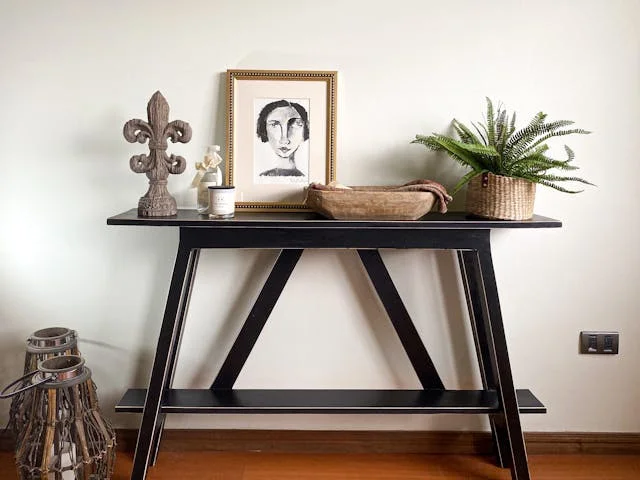
- Black console table furniture pieces suit both industrial and contemporary styles, often featuring metal frames with wood, glass, or lacquered tops.
- Metal table furniture — full steel or iron constructions — offers durability and an industrial or mid-century feel, often with open shelf designs underneath.
- Farmhouse furniture tables in this category typically use reclaimed or distressed wood with chunky turned or tapered legs, suited to rustic and cottage-style interiors.
- Chess furniture table designs — a niche but growing category — feature checkerboard or geometric inlay patterns on the tabletop, blending decorative art with function.
Each of these styles has a different visual weight. A marble-topped table reads as heavier even if it weighs less than a solid oak farmhouse piece. That visual weight affects how the table balances the rest of your room — something worth thinking through before you buy.
How to Style a Console Table in Your Entryway
The entryway console table is the first piece of furniture a guest sees when they walk into your home, and it sets the visual tone for everything else. The good news is that styling one well is less about having expensive accessories and more about understanding proportion and the rule of odd numbers.
Start with a lamp. A table lamp on one side of the console adds height variation and warmth — without it, most entryway tables look flat and unfinished. If the table is wide enough (over 48 inches), two lamps at either end create a more symmetrical, formal look. For narrower tables, one lamp placed off-center with a shorter decorative object on the opposite side gives a more relaxed, curated feel.
A mirror above the console table is close to a universal recommendation because it makes the entryway feel larger and adds a vertical element that draws the eye up. The mirror should be roughly two-thirds the width of the table — not the full width, which tends to look squat, and not so narrow that it looks like an afterthought.
For the tabletop itself, group accessories in odd numbers — three items tend to look more natural than two or four. A typical arrangement might include a tray (to corral small items like keys and coins), a small plant or vase, and one decorative object like a candle or a stack of books. Keep the center of the table relatively clear if you’re actually going to use the surface, rather than just photograph it.
Quick Note: Entryway consoles with drawers or lower shelves earn their keep far more than purely decorative pieces — a drawer for keys and a lower shelf for baskets or shoes turns a styling piece into a working part of your home.
Console table decor in an entryway should also account for the season. Many homeowners keep a core arrangement year-round and swap out one or two accessories — a vase of fresh flowers in spring, a lantern with candles in winter — to keep the entry feeling alive without a full restyling effort.
Console Table in the Living Room Behind a Sofa
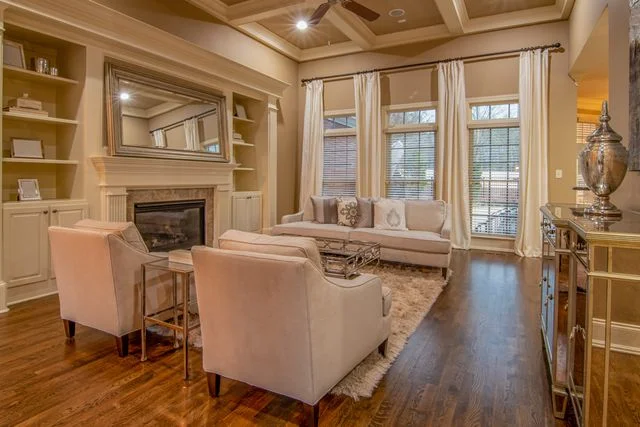
Placing a console table behind a sofa is one of the best ways to anchor a floating sofa arrangement in an open-plan living room. Without it, a sofa positioned away from the wall tends to look unmoored — like furniture that hasn’t been fully arranged yet.
The standard rule is that the console table should be no taller than the back of the sofa — ideally within one or two inches of the sofa’s back height. A table that’s too tall will be visible above the sofa and look awkward; one that’s too low will effectively disappear. Most modern sofas sit between 28 and 34 inches at the back, so measure yours before you shop.
Width is the other key measurement. The console doesn’t need to match the sofa’s full width, but it should extend at least 75% of the way across. A table that’s much narrower than the sofa creates an imbalanced look — like a small bracket under a large shelf.
For sofa table ideas in a living room, the styling logic is different from an entryway. Here you typically want a lower visual profile — avoid very tall lamps that block the view of anyone sitting on the sofa. Clusters of candles, trailing plants, flat books, and low decorative objects all work well. A narrow console table with an open shelf underneath the surface is particularly practical behind a sofa — you can store books, remotes, or charging cables on the lower shelf without them being visible from the front.
According to interior designer Nina Campbell, one of the most common mistakes in living room layouts is treating the sofa table as purely decorative when it can also solve real storage and electrical problems — housing a power strip discreetly or providing a back-of-sofa surface for drinks and snacks during gatherings.
Console Table Materials Compared
The material of your console table determines not just how it looks but how long it lasts, how easy it is to maintain, and what it actually feels like to live with. Here’s an honest comparison of the most common options:
| Material | Durability | Maintenance | Best Style Fit | Price Range (USD) |
|---|---|---|---|---|
| Solid Wood | Very High | Low — occasional wax or oil | Farmhouse, Traditional, Rustic | $200–$1,200+ |
| MDF / Veneer | Medium | Low — wipe clean | Contemporary, Budget-friendly | $60–$350 |
| Marble / Stone Top | High (with care) | High — sealing required | Glam, Modern, Transitional | $300–$2,000+ |
| Metal (Steel/Iron) | Very High | Very Low — wipe clean | Industrial, Mid-Century, Modern | $100–$800 |
| Glass Top + Frame | Medium | High — fingerprints visible | Contemporary, Small Spaces | $80–$500 |
| Reclaimed / Live Edge Wood | High | Low to Medium | Bohemian, Rustic, Organic Modern | $250–$1,500+ |
Real marble is beautiful but honest about its fragility — it stains from wine and acidic liquids, it chips at edges, and it needs resealing periodically. Engineered stone and sintered stone surfaces (like those used by Dekton) give you a similar look with far greater resistance to scratches and staining, which is worth knowing before you commit to a marble-top piece for an entryway that sees daily use.
Our take: For most homes, a solid wood frame with a metal table furniture base — meaning wood shelves or tops combined with steel legs — gives the best balance of looks, durability, and price. You get the warmth of wood with the structural rigidity of metal, and pieces in this construction tend to hold up better over time than pure MDF options at similar price points.
Console Table Size Guide: Getting the Dimensions Right
Buying the wrong size console table is one of the most common and easily avoidable furniture mistakes. The piece can be beautiful in a showroom or product photo and completely wrong for your actual space.
Here are the key measurements to know before you shop:
- Height: Standard console tables are 28–32 inches tall. Entryway-specific models often go up to 36 inches. For behind-sofa placement, match the table height as closely as possible to the sofa back height.
- Depth: Aim for 12–16 inches in a hallway, and up to 18 inches in a living room where there’s more space to move around it.
- Width: In an entryway, leave at least 36 inches of clear walking space on either side of the table — more if possible. Behind a sofa, the table should be at least 75% of the sofa’s width.
- Clearance: If placing a console table in a traffic area, ensure at least 24 inches of clear space between the table and any opposing wall or piece of furniture.
A narrow console table — under 14 inches deep — is the right choice for most hallways and small entryways. Going wider in a tight space might seem like it gives you more surface area, but it actually makes the passage feel narrower and the table harder to style because it dominates the wall rather than complementing it.
Retailers like West Elm (US) and Heal’s (UK) both offer console tables with published depth measurements in their product listings, which makes it easier to compare options directly without having to contact customer service for specifications.
Budget vs. Luxury Console Tables: What the Price Difference Actually Buys You
Console tables span an enormous price range — from under $80 flat-pack options to handmade pieces costing several thousand dollars. The question worth asking isn’t whether expensive is better, but what you actually get for the premium.
At the budget end ($60–$200), you’re mostly looking at MDF or particle board construction with a veneer or lacquer finish, metal legs that may not be fully adjustable, and assembly required. These pieces can look good and work fine in low-traffic areas — a guest bedroom or home office — but they typically show wear faster in a hallway that sees daily use.
In the mid-range ($200–$600), solid wood and metal table furniture construction becomes common. Joints are stronger, surfaces are more resistant to scratches, and drawer mechanisms (if present) actually work smoothly. This is the price range where most buyers get the best value for money.
Luxury console tables ($600 and above) are typically distinguished by handcrafted joinery, premium materials like marble, solid hardwood, or hand-forged metal table furniture, and finishes applied by hand rather than machine. Brands like Hudson Furniture (US) and Neptune (UK) operate in this category — pieces that are designed to last decades and improve with age rather than deteriorate.
One honest trade-off worth acknowledging: luxury console tables often come with longer lead times, especially for custom sizes or finishes. If you need a piece quickly — for a new home or a renovation deadline — a well-chosen mid-range table from a retailer with stock on hand is genuinely the better practical choice, even if the quality ceiling is lower.
For most buyers, a farmhouse furniture tables style or metal-framed piece in the $200–$450 range from a retailer with a clear returns policy will outperform both the cheapest options and the most expensive ones in terms of day-to-day satisfaction. Pairing it with quality accessories and good lighting will do more for the final look than spending three times as much on the table itself. If you’re also thinking about how your console table fits into a broader smart home setup — for example, integrating discreet charging or smart lighting — the lifestyle benefits of smart gadgets for daily use are worth reading alongside your furniture choices.
Frequently Asked Questions
What is the standard depth of a console table, and does it matter?
Most console tables are between 12 and 18 inches deep, and yes — depth matters a lot, especially in hallways. A table that’s 16 inches deep in a narrow hallway can make the passage feel genuinely cramped and create a trip hazard in low light. The general advice is to keep entryway console tables at 14 inches deep or less, reserving deeper options for living rooms and open-plan spaces where there’s more room to move. Always measure your clearance before buying, not after.
Can you use a console table as a TV stand?
You can, but there are a few practical concerns. Most console tables are lower than a standard TV stand — around 28–32 inches tall versus 18–24 inches for a dedicated media unit — which means the screen will sit quite high, which can cause neck strain during extended viewing. A console table also typically lacks the cable management features and enclosed storage of a proper TV unit. That said, a narrow console table works reasonably well for smaller TVs (under 50 inches) in a casual bedroom or spare room where it’s not the primary viewing setup.
How do you stop a console table from looking cluttered?
The most effective technique is to work with a tray. Grouping small items inside a tray on the tabletop creates visual order without requiring you to remove anything — it just contains it. Beyond that, stick to a maximum of five items on the surface, with at least one varying in height significantly from the others. If the table has a lower shelf, use it for storage rather than display — baskets with lids are particularly effective at keeping the lower level tidy without hiding it completely.
What’s the difference between a console table and a sofa table?
These terms are used interchangeably by most retailers, which causes confusion. Technically, a sofa table is a type of console table specifically designed for placement behind a sofa — usually matching the sofa’s back height and sized proportionally to the sofa’s width. A console table is the broader category, which includes entryway pieces, hallway tables, and accent tables placed against walls throughout the home. When a retailer lists a piece as a “sofa table,” it’s usually signaling that the proportions are tailored for behind-sofa placement rather than an entryway.
Is marble a practical choice for a console table in a busy entryway?
Real marble requires more maintenance than most buyers expect — it’s porous, so it stains from wine, coffee, and acidic liquids if not sealed regularly, and the edges chip with impact. In a busy entryway where bags and keys land on the surface daily, real marble is a high-maintenance choice. Engineered marble or sintered stone tops give almost the same visual effect with significantly better resistance to staining, scratching, and daily impact. If you love the marble look but don’t want the upkeep, engineered stone is the practical answer.
How wide should a console table be in a small hallway?
For a narrow hallway, aim for a console table between 36 and 48 inches wide — wide enough to look intentional and provide useful surface space, but not so wide that it reads as a barrier. Leave at least 36 inches of clear walking space, ideally more. In a very tight space (under 6 feet wide), consider a demilune or half-moon console table, which has a curved front edge that intrudes less into the walking space than a standard rectangular piece of the same width.
Final Thoughts
The furniture table console is one of those pieces that rewards careful thought before purchase and repays you daily once you get it right. Size and material are the two decisions that matter most — get those right and the styling almost takes care of itself. Get them wrong and even the most expensive piece will feel awkward in the space.
Before you buy, measure your space with tape and mark the footprint on the floor with masking tape — it takes five minutes and saves considerable regret. Then decide on your material based on traffic and maintenance tolerance, not just aesthetics. From there, start your search in the $200–$450 mid-range where the best value consistently lives, and allocate the rest of your budget to a good mirror, a lamp, and two or three quality accessories that make the whole arrangement come together.
About the Author