ffIntroduction to Smart Home Automation Devices
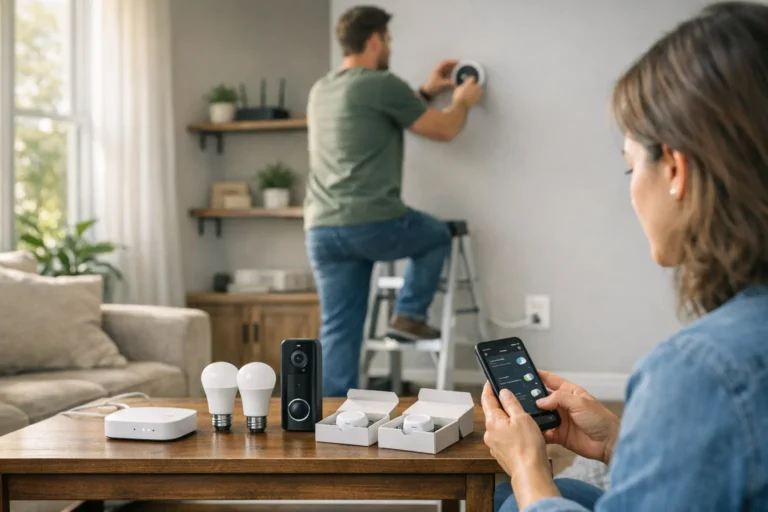
The concept of a “smart home” has transformed from a futuristic luxury into a practical reality for millions. In 2026, smart home automation devices are no longer just novel gadgets; they are integrated tools that enhance our daily lives by offering unparalleled convenience, security, and efficiency. From lights that adjust to your sleep schedule to thermostats that learn your habits, homeowners in the USA and UK are increasingly investing in these technologies.
So, what is driving this trend? In my experience testing these systems, the appeal lies in offloading mental tasks. Automation handles the small, repetitive decisions we make every day, freeing up our time and energy for more important things. Whether it’s a voice assistant reminding you to take out the trash or a smart lock that ensures your door is always secure, these devices work quietly in the background to streamline your life.
This guide is designed to be your starting point for understanding and implementing smart home technology. We will explore everything from the basic principles of how these devices work to practical ideas for automating every room in your house.
In this guide, you will learn:
- The essential technology that powers a modern smart home.
- Top-rated devices that are trending in 2026.
- Actionable smart home automation ideas to inspire your own setup.
- Common mistakes to avoid and expert tips for choosing the right products.
Quick Overview / AI Summary
Smart home automation devices are internet-connected products like lights, thermostats, and security cameras that can be controlled remotely or programmed to operate automatically. They work together through a central system, often controlled by a voice assistant, to enhance convenience, improve energy efficiency, and increase home security for users.
Table of Contents
- How Smart Home Automation Works
- Top Smart Home Automation Devices in 2026
- Smart Home Automation Ideas for Every Room
- Benefits of Installing Smart Home Automation Devices
- Common Mistakes to Avoid When Setting Up a Smart Home
- How to Choose the Right Smart Home Automation Devices
- Smart Home Automation Devices Comparison
- Real-Life Examples and User Experiences
- Future Trends in Smart Home Automation (2026 and Beyond)
- Pros and Cons of Smart Home Automation Devices
- Conclusion
- FAQ
How Smart Home Automation Works
Before you start buying devices, it helps to understand the basic technology that makes your home “smart.” At its core, home automation relies on a network of devices that can communicate with each other and a central controller. This communication typically happens via your home’s Wi-Fi, but other protocols like Bluetooth, Zigbee, or Z-Wave are also common.
A “smart hub” or a voice assistant like Amazon Alexa or Google Assistant often acts as the brain of the operation. This is where you create automation rules—simple “if this, then that” commands. For example, “If my phone’s location leaves the house (geofencing), then lock the front door and turn off all the lights.” These rules can be simple schedules, like turning on the porch light at sunset, or complex routines triggered by sensors.
There’s also a distinction between cloud and local control. Cloud-based control means your commands are sent over the internet to a server and then back to your device. Local control means the commands are processed directly within your home network. In my experience, local control is faster and more reliable, especially if your internet connection is spotty.
Top Smart Home Automation Devices in 2026
The market for smart gadgets is vast, but a few categories have emerged as essential for any modern smart home. In 2026, the focus is on devices that offer practical benefits rather than just novelty.
Smart lighting is often the entry point for most people. Systems like Philips Hue allow you to change not only the brightness but also the color temperature of your lights to match the time of day, which can improve focus and sleep. Smart thermostats from brands like Nest and Ecobee remain incredibly popular for their ability to learn your schedule and cut down on energy waste.
Security is another major driver. Smart locks that let you grant temporary access to visitors and video doorbells that show you who’s at the door have become standard. I’ve noticed a huge leap in the intelligence of these devices; many can now distinguish between a package delivery, a person, and a passing car.
Other popular devices this year include:
- Smart Appliances: Refrigerators with internal cameras and ovens you can preheat from your phone.
- Smart Speakers: The central command hub for controlling everything with your voice.
- Robot Vacuums: Advanced models can now mop floors and even empty their own dustbins.
Smart Home Automation Ideas for Every Room
The real magic of smart home automation devices comes alive when you start creating routines tailored to your lifestyle. Here are some practical ideas for different areas of your home.
Living Room:
- Create a “Movie Night” scene that dims the lights, closes the smart blinds, and turns on your TV and sound system with a single voice command.
- Use smart plugs on your entertainment center to completely cut power to devices when not in use, saving on standby energy consumption.
Kitchen:
- Ask your smart display to show a recipe and set multiple timers while you cook.
- Install a smart smoke detector that sends an alert to your phone if it senses trouble, and can even shut off your HVAC fan to prevent smoke from spreading.
Bedroom:
- Program a “Good Morning” routine that slowly brightens your smart lights to simulate a sunrise, opens the blinds, and plays your favorite morning playlist.
- Use a smart thermostat sensor to ensure the bedroom stays at the perfect temperature for sleeping, even if other parts of the house are warmer or cooler.
Bathroom and Outdoors:
- Place a leak sensor under sinks to get an instant alert about water leaks before they cause major damage.
- Set up smart sprinklers that check the weather forecast and automatically skip watering if rain is expected.
Benefits of Installing Smart Home Automation Devices
Why are so many people investing in these gadgets? The advantages go far beyond simply being able to turn on a light with your voice. The core benefits are convenience, efficiency, and security.
The convenience factor is immediate. Waking up to a pre-warmed house, having your coffee maker start automatically, and never fumbling for keys in the dark are small luxuries that add up. Over time, these automations free up your mental energy to focus on more important things.
Energy savings are another huge draw. I have personally seen my utility bills decrease after installing a smart thermostat and automating my lighting. These devices ensure you’re only using energy when and where you need it. For many, the devices pay for themselves within a few years.
Finally, the peace of mind that comes with enhanced security is invaluable. Being able to check that your doors are locked from anywhere in the world, or getting an alert when your child arrives home from school, offers a sense of safety that traditional systems cannot match.
Common Mistakes to Avoid When Setting Up a Smart Home
As exciting as it is to start building a smart home, there are a few common pitfalls I’ve seen people fall into. The biggest mistake is ignoring compatibility. Buying a collection of random devices from different brands can lead to a frustrating experience where you need five different apps to control everything. Look for devices that work with a central platform like Google Home, Apple HomeKit, or Amazon Alexa.
Another frequent issue is underestimating the importance of a strong Wi-Fi network. Each smart device is another client on your network. A basic router provided by your internet company can quickly get overwhelmed, leading to slow speeds and unresponsive devices. Investing in a modern mesh Wi-Fi system is crucial for a reliable smart home.
Lastly, don’t neglect privacy and security. Leaving the default password on a security camera or failing to enable two-factor authentication on your accounts is an open invitation for trouble. Treat the security of your smart home with the same seriousness as your online banking.
How to Choose the Right Smart Home Automation Devices
With so many options on the market, choosing the right smart home automation devices can feel daunting. My advice is to start with a clear goal in mind. Are you trying to save energy? A smart thermostat is your best first step. Do you want more peace of mind? Start with a video doorbell and smart locks.
Budget is obviously a factor, but don’t just shop by price. A cheap, off-brand smart plug might seem like a good deal, but if it has a buggy app and poor security, it’s not worth the savings. Stick to reputable brands with a proven track record of software updates and customer support.
Finally, think about future-proofing. The “Matter” protocol is a new industry standard designed to make devices from different companies work together seamlessly. In 2026, I strongly recommend choosing products with Matter certification to ensure your investment remains compatible with future technology.
Smart Home Automation Devices Comparison
Navigating the ecosystem wars between Google, Amazon, and Apple is a key part of setting up your smart home. Each has its strengths.
Apple HomeKit vs. Google Home vs. Amazon Alexa:
- Amazon Alexa: Has the widest range of compatible third-party devices (“Works with Alexa”). It’s incredibly versatile for building complex routines.
- Google Home: Offers a more intuitive and “smarter” voice assistant, especially for answering questions and integrating with Google services like Calendar.
- Apple HomeKit: Provides the tightest security and privacy controls, with a strong focus on local processing. It is the best choice for those already invested in the Apple ecosystem.
Nest vs. Ecobee (Smart Thermostats):
- Nest: Known for its simple design and powerful learning algorithm that automates your schedule for you.
- Ecobee: Offers more manual control and comes with room sensors out of the box, allowing for more precise temperature management in different parts of the house.
I generally advise people to pick one ecosystem and stick with it as much as possible to ensure the smoothest experience.
Real-Life Examples and User Experiences
Let’s move beyond the technical specs. How do these devices actually impact daily life? I spoke with a family who installed a smart thermostat and automated blinds. They programmed the blinds to close during the hottest part of the afternoon. This simple routine lowered the strain on their AC unit and saved them over 15% on their summer electricity bill.
Another example comes from a friend who works from home. He created a “Focus Mode” routine. With one command, his office lights shift to a cool, bright white to improve concentration, his smart speaker plays ambient focus music, and his phone goes into “Do Not Disturb” mode. He says it has dramatically improved his productivity.
For elderly homeowners, these devices can be life-changing. I helped an older couple set up voice-controlled lights and smart locks. It gave them more independence and provided their children with peace of mind, as they could remotely check that everything was secure.
Future Trends in Smart Home Automation (2026 and Beyond)
The world of smart home tech is evolving at a rapid pace. Looking ahead, the biggest trend is the rise of proactive, AI-driven automation. Instead of you programming routines, your home will learn your habits and anticipate your needs. Imagine your house detecting that you’ve had a stressful day based on your calendar and your smartwatch data, and automatically dimming the lights and playing calming music when you arrive home.
Integration with electric vehicles (EVs) is also becoming standard. Your home will be able to intelligently charge your car when electricity rates are lowest. Some systems even allow your EV’s battery to power your home during a blackout.
We are also seeing advancements in health monitoring. Smart mattresses that track sleep quality and even bathroom mirrors that can analyze skin health are no longer science fiction. These devices will provide us with a wealth of data to manage our well-being proactively.
Pros and Cons of Smart Home Automation Devices
It is important to have a balanced perspective. While I am a huge proponent of these technologies, they aren’t without their drawbacks.
Pros:
- Convenience: The ability to automate daily tasks saves time and mental energy.
- Energy Savings: Smart thermostats, lights, and plugs can significantly reduce utility bills.
- Enhanced Security: Remote monitoring and automated alerts provide unparalleled peace of mind.
- Accessibility: Voice control and automation are incredibly empowering for users with mobility issues.
Cons:
- Initial Cost: The upfront investment can be high, especially for a fully integrated system.
- Privacy Concerns: Inviting internet-connected microphones and cameras into your home requires careful consideration and trust in the manufacturers.
- Complexity and Maintenance: Devices require software updates, and troubleshooting connectivity can be frustrating.
Conclusion
The journey into home automation is an exciting one. In 2026, smart home automation devices offer a powerful way to make our living spaces more convenient, efficient, and secure. Whether you’re looking to save money on your energy bills, bolster your home’s security, or simply make daily life a little easier, there’s a smart solution available.
My best advice for anyone starting out is to begin small. Pick one area of your life that you’d like to improve and find a single device to address it. You don’t need to automate your entire house overnight. By gradually building your system, you can learn what works for you and make informed decisions along the way.
Ultimately, the goal is to create a home that responds to your needs, not the other way around. By embracing these technologies thoughtfully, you can craft a living environment that is truly and uniquely yours.
Key Takeaways to Remember:
- Start with a clear goal, such as improving security or saving energy.
- Prioritize a strong Wi-Fi network to ensure your devices are reliable.
- Choose devices that are compatible with a central ecosystem like Google, Amazon, or Apple.
- Don’t neglect security—use strong passwords and enable two-factor authentication.
FAQ
What are the best smart home automation devices for beginners?
The best devices to start with are smart plugs and smart light bulbs. They are relatively inexpensive, easy to install, and provide an immediate and tangible benefit, allowing you to get a feel for automation without a large commitment.
How much does it cost to automate a full home?
The cost varies greatly. A basic starter kit with a smart speaker and a few lights might cost under $200. A comprehensive system for a 3-bedroom home with smart lighting, thermostats, locks, and cameras can range from $2,000 to $5,000 or more if professionally installed.
Are smart home devices safe from hacking?
No internet-connected device is 100% immune, but you can dramatically reduce your risk. Always change default passwords, use two-factor authentication, and buy from reputable brands that provide regular security updates.
Can smart devices save money on energy bills?
Yes, absolutely. Smart thermostats are proven to reduce heating and cooling costs by 10-15% by learning your schedule. Smart lighting and plugs also contribute by ensuring lights and appliances are off when not needed.
What is the easiest way to integrate devices from different brands?
The easiest way is to use a central smart home platform like Amazon Alexa, Google Home, or Apple HomeKit. When purchasing new devices, look for the “Works with…” badge for your chosen ecosystem to ensure they can all be controlled from a single app.
How do I troubleshoot connectivity issues?
Most connectivity issues stem from a weak Wi-Fi signal. Start by rebooting your router and the device. If the problem persists, consider moving the device closer to your router or investing in a mesh Wi-Fi system to improve coverage throughout your home.
Which rooms benefit most from automation?
The living room and kitchen often see the most benefit from convenience-focused automation (lighting, entertainment, speakers). Bedrooms benefit greatly from routines that improve sleep, while entryways see the biggest boost in security from smart locks and cameras.
About the Author