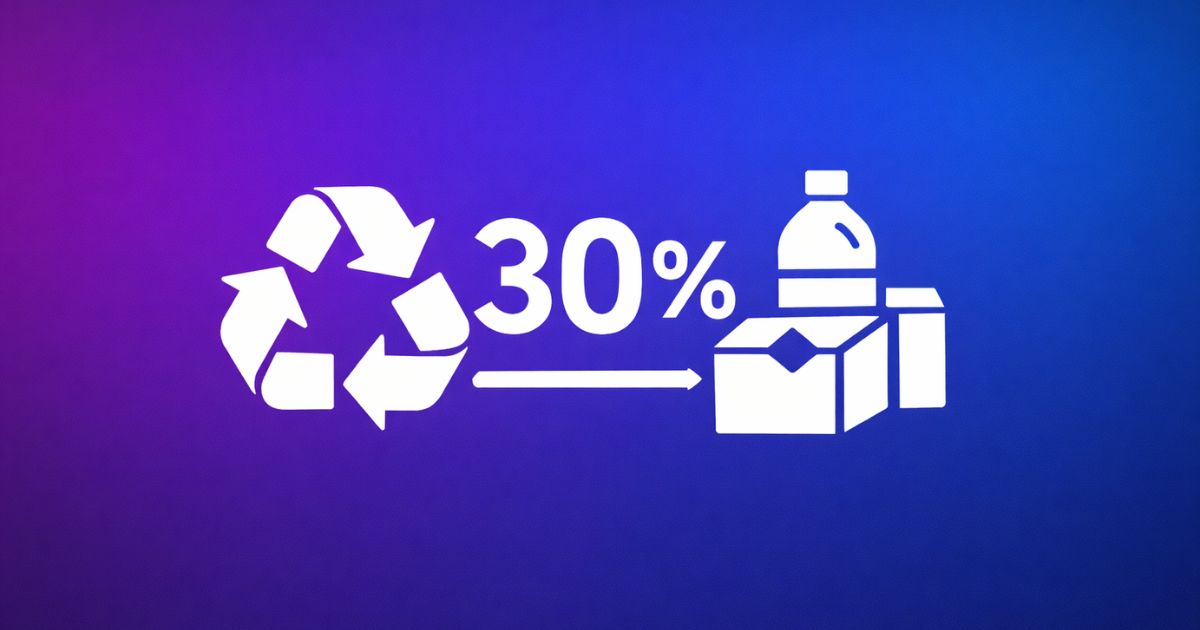
Walk through any supermarket aisle and you’ll see sustainability labels on bottles, boxes, and wrappers. One of the most common German terms is recyclatanteil, and it often appears next to a percentage that looks simple but can mean several things.
This guide explains what recyclatanteil really means, how it is calculated, and how to read it like a smart shopper. If you want to avoid confusion, spot vague claims, and understand recycled content properly, you’re in the right place.
What Does Recyclatanteil Mean?
Recyclatanteil means the share or percentage of recycled material used in a product or its packaging. In plain English, it is the recycled-content percentage. If you see “Recyclatanteil: 30%,” it means 30% of that item’s material comes from recycled sources.
You will commonly find recyclatanteil labels on plastic bottles, food trays, detergent containers, paper packaging, and even some electronics housings. The term is especially common in German-speaking markets, but the idea is global and growing fast.
Recyclat vs. Recycling: Don’t Confuse These
It’s easy to mix up recyclat and recycling, but they are not the same. Recycling is the process—collecting waste, sorting it, and reprocessing it into usable material. Recyclat is the result—the recycled material that can be used again.
A quick analogy helps: recycling is baking, recyclat is the bread. When a package shows a recyclatanteil, it is not describing the recycling process. It is telling you how much “recycled bread” is inside the new product.
Types of Recyclatanteil: PCR vs PIR
Recyclatanteil often comes from two major sources: PCR and PIR. PCR (Post-Consumer Recycled) material comes from products that people actually used and threw away, like bottles, shampoo containers, or shipping boxes collected from households.
PIR (Post-Industrial Recycled) material comes from manufacturing leftovers, such as clean plastic scraps or paper offcuts that never reached consumers. PCR is usually considered the stronger sustainability claim because it helps reduce consumer waste, but both types can play an important role.
How Recyclatanteil Is Calculated
Recyclatanteil is commonly calculated by weight, not by volume. That means heavier parts of packaging can influence the number significantly. A bottle cap or thick base may count more than a thin label, even if they look similar in size.
Another important detail is scope: is the recyclatanteil measured for the entire product, only the packaging, or just a single component? Some labels refer only to the bottle body, not the cap, pump, or wrapper—so the percentage may not represent everything you’re holding.
Where the Recycled Content Actually Comes From
To create recyclat, waste materials must be collected and sorted. For plastics, that usually begins with packaging waste streams like PET drink bottles or HDPE detergent containers. For paper, it starts with old boxes, newspapers, and office paper that can be pulped again.
After sorting, materials are cleaned and processed. Plastics may be shredded into flakes, washed, and melted into pellets. Paper is pulped and filtered. This preparation step matters because cleaner input usually produces higher-quality recyclat that is easier to use in new products.
What Recyclatanteil Labels Look Like on Products
A recyclatanteil claim might appear as “Recyclatanteil: 50%,” “mit Recyclingmaterial,” or “aus recyceltem Kunststoff.” Some packages also use icons, arrows, or circular symbols, but symbols can be decorative unless backed by clear wording and scope.
Pay attention to small print. You may see phrases like “Flasche aus 100% Recyclat” (bottle made from 100% recyclat) while the label or cap is excluded. The most honest packaging makes it clear which part contains recycled content.
Why Recyclatanteil Matters for Consumers
When you choose products with a meaningful recyclatanteil, you help create demand for recycled materials. Demand is important because it encourages investment in collection, sorting, and reprocessing infrastructure—turning recycling from an idea into a functioning circular system.
Recyclatanteil also reduces dependence on virgin materials. For plastics, that often means using less fossil-based raw material. For paper, it means reducing pressure on forests and lowering resource intensity. It’s not magic, but it is a practical step toward better material cycles.
Why Recyclatanteil Matters for Brands and Manufacturers
For brands, recyclatanteil is not just marketing—it is also strategy. Many retailers and regulators increasingly expect recycled content, and brands that can prove it may gain better shelf placement, stronger trust, and improved ESG reporting credibility.
However, increasing recyclatanteil can be difficult. High-quality recycled material can be limited in supply, more expensive, or inconsistent in color and performance. Manufacturers often balance quality, safety requirements, and production efficiency while still trying to raise recycled content over time.
Common Misunderstandings and Greenwashing Risks
One major misconception is thinking recyclatanteil means the product is “fully recyclable.” These are different claims. A package can have a high recyclatanteil but still be hard to recycle if it uses mixed materials, dark pigments, or complex layers.
Another risk is vague wording. “Made with recycled material” could mean 5% or 50%. Also, a claim might apply only to one part of the packaging, like the outer box, while the inner plastic tray is virgin material. Clarity and scope are everything.
Standards, Certifications, and Proof of Recyclatanteil
Because recycled-content claims can be misused, many companies rely on third-party verification or certification systems. These systems often track materials through a “chain of custody,” documenting where recyclat came from and how it moved through supply chains.
For consumers, the practical tip is simple: look for transparency. Credible brands explain whether the recyclat is PCR or PIR, specify the percentage, and clearly state which component it applies to. The more specific the claim, the easier it is to trust.
Recyclatanteil in Different Materials
In plastics, recyclatanteil is common in materials like PET and HDPE. These can perform well when recycled, but quality depends on sorting and cleaning. Some plastics are harder to recycle, and food-contact rules can also limit where recycled plastic may be used.
Paper and cardboard often achieve high recyclatanteil because fibers can be recycled multiple times, although they degrade gradually. Glass and metals are especially strong in circular systems, since they can often be recycled repeatedly with lower material loss, making recycled content easier to maintain.
Conclusion
Recyclatanteil is a simple word with a powerful message: how much recycled material is inside a product or package. To interpret it correctly, always check the percentage, the material type, and the scope—whether it applies to the full item or only a part.
A quick checklist helps: Is the claim specific? Does it mention PCR or PIR? Does it clearly say “bottle,” “cap,” or “packaging”? When you read recyclatanteil with these questions in mind, you avoid confusion and make smarter, more sustainable choices.
You May Also Like
About the Author