Introduction to Smart Home Automation Systems UK
The idea of a home that anticipates your needs is no longer science fiction. In 2026, UK households are increasingly embracing technology that makes life simpler, safer, and more efficient. The demand for smart home automation systems UK is growing rapidly, as homeowners look for more than just a few clever gadgets. They want a fully integrated ecosystem where devices work together seamlessly.
This guide is designed for anyone curious about creating a smarter living space. Whether you’re a homeowner planning a renovation, a renter wanting to add convenience, or a landlord looking to increase property value, you’ll find valuable insights here. We will explore how these systems work, compare the best options on the market, break down costs, and highlight common mistakes to avoid.
Quick Overview
Smart home automation systems in the UK connect various devices like lights, heating, and security to a central hub, allowing them to work together automatically. These systems use triggers and routines to perform tasks without manual input, offering benefits like increased convenience, energy efficiency, and enhanced security for modern homes.
Table of Contents
- What Are Smart Home Automation Systems and How Do They Work?
- Types of Smart Home Automation Systems in the UK
- Best Smart Home Systems UK in 2026 (Top Platforms Compared)
- Smart Home Devices UK: Must-Have Gadgets in 2026
- Home Automation Installation UK: DIY vs Professional Setup
- Benefits of Smart Home Automation Systems UK
- Pros and Cons of Smart Home Automation Systems
- Cost of Smart Home Automation Systems UK in 2026
- Common Mistakes to Avoid When Setting Up Smart Homes
- Smart Home Automation Systems UK vs Traditional Homes
- Future of Smart Home Automation Systems in the UK (2026 and Beyond)
- Conclusion
- FAQ – Smart Home Automation Systems UK
What Are Smart Home Automation Systems and How Do They Work?
At its core, a smart home automation system is the brain that connects and commands all your smart devices. It’s what separates a collection of gadgets from a truly intelligent home. Instead of you telling your lights to turn on, the system does it for you based on a set of rules.
These systems typically consist of a few key components:
- Hub/Controller: The central command center that communicates with all your devices.
- Smart Devices: The individual products like lights, thermostats, locks, and plugs.
- Sensors: Devices that detect changes in the environment, such as motion, temperature, or whether a door is open.
- App/Voice Assistant: Your interface for controlling the system and setting up rules.
Automation works through “routines” or “scenes.” You create rules based on triggers. For example, a trigger could be the time of day, your phone’s location, or a sensor detecting motion. A simple routine might be: when a motion sensor in the hallway detects movement after sunset (trigger), the hallway lights turn on to 50% brightness (action).
Types of Smart Home Automation Systems in the UK
Smart home automation isn’t a one-size-fits-all solution. It can be broken down into several categories, allowing you to build a system that focuses on what matters most to you.
- Lighting Automation: This goes beyond smart bulbs. It involves creating scenes for different activities, like “Movie Night” which dims the lights, or having them gradually brighten in the morning to help you wake up.
- Heating & Climate Control: Smart thermostats learn your schedule and automatically adjust the temperature to save energy. You can also integrate them with sensors to heat only the rooms you’re using.
- Security & Surveillance: This includes smart cameras, doorbells, and locks that work together. For instance, if your smart doorbell detects a person, your outdoor lights can turn on and you can receive a notification on your phone.
- Energy Management: Smart plugs can automatically turn off devices that draw power when not in use, helping you reduce your electricity bill.
Best Smart Home Systems UK in 2026 (Top Platforms Compared)
Choosing the right platform is the most important decision you’ll make. In 2026, the market is dominated by a few key ecosystem types.
- Voice Assistant Ecosystems (e.g., Amazon Alexa, Google Home, Apple HomeKit): These are great for beginners. They are DIY-friendly and compatible with a vast range of devices. However, they rely on the cloud and complex automation can be limited.
- Hub-Based Systems (e.g., Samsung SmartThings, Hubitat): These offer more power and local control, meaning some routines will work even if your internet goes down. They are a good middle ground for enthusiasts who want more customization without the cost of a professional system.
- Premium Professional Systems (e.g., Control4, Crestron): These are professionally installed, fully integrated systems that offer unparalleled reliability and customization. They are ideal for large homes or new builds but come with a significant price tag.
In my experience, starting with a voice assistant ecosystem is the easiest way to dip your toes in the water. You can always upgrade to a more powerful hub later.
Smart Home Devices UK: Must-Have Gadgets in 2026
If you’re building a smart home from scratch, some devices provide more immediate impact than others.
- Smart Thermostats (e.g., Nest, Hive): These are often the gateway to home automation. They learn your habits and can save you a significant amount on your heating bills.
- Smart Lighting (e.g., Philips Hue): The ability to change the color and brightness of your lights completely transforms the ambiance of a room.
- Smart Security Cameras and Doorbells (e.g., Ring, Arlo): These provide peace of mind, allowing you to see who is at your door or check on your home from anywhere.
- Smart Plugs: These are simple, affordable devices that can make almost any appliance “smart,” from a lamp to a coffee maker.
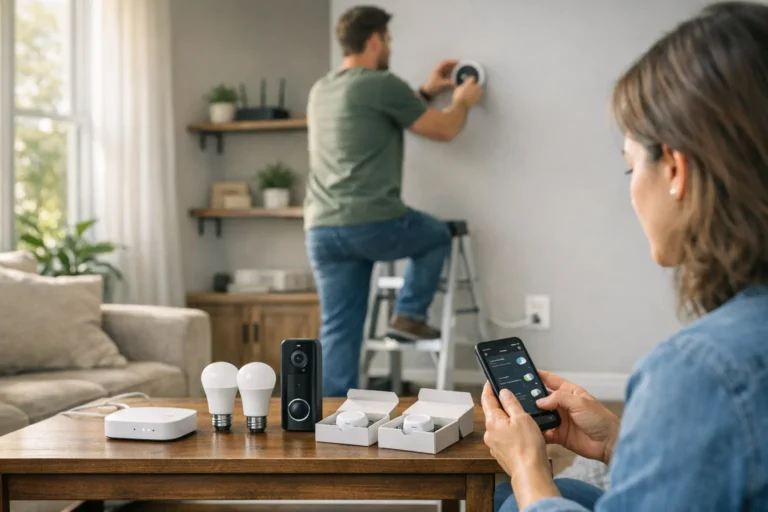
A great budget starter kit for a typical UK flat would include a smart speaker, a few smart bulbs, and a smart thermostat.
Home Automation Installation UK: DIY vs Professional Setup
One of the biggest questions is whether to install a system yourself or hire a pro.
DIY Installation:
This is a great option for smaller systems built around platforms like Alexa or Google Home. It’s cheaper and allows you to learn as you go. The main drawback is the time it takes to research compatibility and troubleshoot issues.
Professional Installation:
For complex systems, especially those involving electrical wiring like smart light switches or integrated blinds, a professional is recommended. Home automation installation UK experts ensure everything is safe, secure, and works seamlessly. While more expensive, it saves you headaches and provides a more robust, reliable system from day one.
Benefits of Smart Home Automation Systems UK
Why are so many people investing in smart home automation systems UK? The benefits go far beyond just convenience.
- Energy Efficiency: A smart thermostat and automated lighting can significantly reduce your energy consumption, lowering your bills.
- Enhanced Security: Integrated cameras, locks, and sensors create a powerful security network that you can monitor remotely.
- Convenience: Imagine your lights turning on as you arrive home, your coffee brewing automatically in the morning, and all your doors locking with a single command.
- Increased Property Value: A well-designed smart home is an attractive feature for potential buyers and can increase the resale value of your property.
- Accessibility: Automation can be life-changing for elderly individuals or those with disabilities, allowing for greater independence through voice control and automated routines.
Pros and Cons of Smart Home Automation Systems
It’s important to have a balanced view. While smart homes offer incredible advantages, there are drawbacks to consider.
Pros:
- Saves time through automated daily tasks.
- Reduces energy bills over the long term.
- Provides peace of mind through remote monitoring.
- Offers a modern, convenient lifestyle.
Cons:
- High upfront cost for devices and installation.
- A learning curve is involved in setting up routines.
- Potential privacy concerns with internet-connected devices.
- Dependency on a stable Wi-Fi connection.
Cost of Smart Home Automation Systems UK in 2026
The cost can vary dramatically based on your ambitions.
- Entry-Level Setup (£200 – £500): This typically includes a smart speaker, a few smart bulbs, some smart plugs, and maybe a smart thermostat.
- Mid-Range System (£1,000 – £5,000): This could cover lighting and heating for a whole house, plus smart security devices and a dedicated hub for more complex automation.
- Fully Integrated Luxury Home (£10,000+): This involves professional installation of systems like Control4, with integrated blinds, multi-room audio, and a seamless user experience.
Don’t forget to factor in potential monthly subscriptions for cloud storage for your security cameras.
Common Mistakes to Avoid When Setting Up Smart Homes
From my experience, I’ve seen people make the same few mistakes when starting their smart home journey.
- Mixing Incompatible Brands: Not all devices work together. Always check for compatibility with your chosen ecosystem (e.g., “Works with Alexa”) before buying.
- Ignoring Wi-Fi Coverage: Smart devices are only as reliable as your Wi-Fi. A weak signal in certain rooms will lead to frustration. Invest in a good mesh Wi-Fi system.
- Not Planning First: Buying devices randomly leads to a disjointed system. Decide what you want to automate first, then choose the platform and devices that fit your plan.
- Forgetting Cybersecurity: Use strong, unique passwords for your accounts and enable two-factor authentication to keep your system secure.
Smart Home Automation Systems UK vs Traditional Homes
How does a smart home stack up against a traditional one? The differences are significant.
A smart home offers superior energy efficiency, as a smart thermostat avoids heating an empty house. Security is also far more advanced, with real-time alerts and remote access compared to a standard burglar alarm. The convenience is unmatched—a traditional home can’t automatically adjust the lights and lock the doors when you go to bed. This convenience and efficiency can also translate to a higher resale value.
Future of Smart Home Automation Systems in the UK (2026 and Beyond)
The future is predictive. Systems will move beyond following commands to anticipating your needs. AI will learn your patterns and suggest new automations. We’ll see tighter integration with smart energy grids, allowing homes to automatically use power when it’s cheapest. Your electric vehicle will communicate with your home, ensuring it’s charged and ready when you need it without overloading the system. Voice and gesture control will become even more seamless, making interaction feel completely natural.
Conclusion
Investing in smart home automation systems UK in 2026 is about more than just novelty; it’s about creating a living space that is more efficient, secure, and aligned with a modern lifestyle. By understanding how these systems work, planning your ecosystem carefully, and starting with a few key devices, you can build a home that works for you.
The key is to start small. You don’t need to automate everything at once. Begin with a problem you want to solve—whether it’s high energy bills or wanting more peace of mind—and choose the devices that address it. The long-term value in both cost savings and quality of life makes it a worthwhile investment for almost any UK household.
FAQ – Smart Home Automation Systems UK
What is the best smart home system UK in 2026?
The “best” system depends on your needs. For beginners and DIY enthusiasts, ecosystems like Amazon Alexa or Google Home offer the widest compatibility and ease of use. For those wanting more power and local control, a hub-based system like Samsung SmartThings or Hubitat is a great step up. For high-end, fully integrated new builds, professional systems like Control4 are the gold standard.
How much does home automation installation UK cost?
The cost varies widely. Basic DIY setup is free, but you pay with your time. For professional installation of devices like smart light switches or thermostats, expect to pay an electrician between £150 and £400. A full-scale, professionally designed and installed system for an entire house can range from £5,000 to over £20,000, depending on the complexity and brand.
Are smart home devices UK secure?
Security is a valid concern. Reputable brands invest heavily in securing their devices and platforms. You can greatly enhance your security by using strong, unique passwords for each smart home account, enabling two-factor authentication, and keeping your device firmware and router updated. It’s also wise to stick with well-known brands that have a track record of providing security updates.
Can I install a smart home system myself?
Absolutely. Most popular smart home devices are designed for easy DIY installation. Things like smart speakers, bulbs, plugs, and many security cameras can be set up in minutes using a smartphone app. However, for any devices that require wiring into your mains electricity, such as smart light switches or certain thermostats, it is highly recommended to hire a qualified professional.
Do smart homes increase property value in the UK?
Yes, they can. Features like integrated smart heating, intelligent lighting, and enhanced security are increasingly attractive to buyers. While you may not recoup 100% of the cost, a well-implemented smart home can make your property stand out, potentially leading to a faster sale and a higher final offer compared to a similar, non-automated home.
What internet speed is required for smart home automation?
The speed itself is less important than the stability and bandwidth of your Wi-Fi network. Most smart devices use very little data. However, if you have dozens of devices, especially multiple security cameras streaming high-definition video, you’ll need a robust network. A standard fibre broadband connection (30 Mbps or higher) is usually sufficient, but a good quality router or mesh Wi-Fi system is crucial to ensure all devices have a strong, stable connection.
Are smart home systems worth it in 2026?
For most people, yes. The long-term energy savings from a smart thermostat can often pay for the initial investment. The added convenience and peace of mind from enhanced security provide daily value that’s hard to quantify. If you start small and build a system that solves real problems for you, a smart home is a very worthwhile investment in modern living.
About the Author